




















































Counterpoint

Is There Damage Below the Boat's Waterline?

Where does the Awami League stand today, 18 months after the July Uprising, and is there any way back for the party post-February 12?

A Tale of Two Slogans

Why “Bangladesh First” Is Coherent Politics and “We Are the People” Is a Theological Trap for Jamaat. The first is a moral ordering principle which prioritizes responsibility. The second is a sovereignty claim and defines power.

“Bacho, Becho” (Survive and Sell)

In complete idiocy, that nation, while it prepares to scan the citizens’ history and moral character, in order to judge their citizens eligibility criterion, they forgot that the digital space has records of all they once were, all they currently are and all that they will become in the near future

What the Law Actually Says About Polygamy

There was never a provision in the law that the permission of the first wife is needed for a second marriage; therefore, the court did not say anything new.

Why Bangladesh needs rule-based trade monitoring

A country aspiring to become a trillion dollar economy cannot afford to operate with manual, subjective, or personality-driven oversight. It needs strong institutions delivering predictable outcomes.

Somaliland’s Israel Gambit Is a Strategic Own Goal. Bangladesh Learned This Lesson in 1971

Bangladesh rejected Israel’s recognition not because it could afford to be principled -- but because it could not afford not to be strategic. Somaliland should take note. The lesson is clear: recognition divorced from coalition-building and regional consensus can be worse than no recognition at all.

Is There Damage Below the Boat's Waterline?

Where does the Awami League stand today, 18 months after the July Uprising, and is there any way back for the party post-February 12?

A Tale of Two Slogans

Why “Bangladesh First” Is Coherent Politics and “We Are the People” Is a Theological Trap for Jamaat. The first is a moral ordering principle which prioritizes responsibility. The second is a sovereignty claim and defines power.

Beyond Fault Lines: Bangladesh's Intolerance Problem

What if Bangladesh's problem isn't the divides themselves? Secular versus religious. Bengali versus Muslim. Shahbag versus Shapla. Aspiration versus stagnation. What if the real problem is our inability to tolerate disagreement at all?

Convenience for Users, Uncertainty for Workers

Platforms expand opportunities while simultaneously consolidating economic power. Those who control digital infrastructure and data ecosystems enjoy disproportionate gains, while workers and small entrepreneurs absorb most of the risks.

The Hidden Empire

The uncomfortable truth is this -- America is the capital of a global corporate empire. But the real rulers are not politicians but corporations, whose loyalty lies only with money. The Transnational Private Sector -- TPS -- is not a mere American phenomenon. It’s a global empire, and its influence reaches every corner of the planet.

The New Bangladesh-India Dynamic

The India-Bangladesh relationship is undergoing not rupture, but delayed normalization. Bangladesh is asserting the right to disagree without permission. India is confronting the limits of informal hegemony

“Bacho, Becho” (Survive and Sell)

In complete idiocy, that nation, while it prepares to scan the citizens’ history and moral character, in order to judge their citizens eligibility criterion, they forgot that the digital space has records of all they once were, all they currently are and all that they will become in the near future

When Memes Rewrite the Law

Bangladesh’s second marriage law hasn’t changed. What has changed is the way people have been talking about it. Social media has turned a technical legal issue into a viral topic without context.

What Zaima Said and Why It Matters

The most enduring line of her address may be her insistence that empowerment must reach homes, institutions, and mindsets simultaneously. This is not a comfortable demand. It implicates everyone.

An Open Letter to Barrister Zaima Rahman

Whatever path you ultimately choose, I offer you my sincere best wishes. May your journey ahead be guided by wisdom, courage, and purpose -- and may it be as smooth and fulfilling as destiny permits.

The Politics of Responsibility and Compassion

Every Muslim knows the phrase Ar-Rahman Ar-Rahim -- the most Beneficent, the most Compassionate. Can we reorient our moral compass towards the politics of responsibility and compassion?

Who Should Speak About Earthquakes?

Responsibility for earthquake and tectonic matters should logically rest with the Geological Survey of Bangladesh. What scientists can do is identify risk zones and recommend safer building practices.

The Ganges Treaty and the End of Discretionary Diplomacy

Turning water into a nationalist symbol may mobilize sentiment, but it has never produced water -- and it has often delayed the reordering of ties that scarcity now makes unavoidable.

The Song Remains: Freedom, Memory, and the Refusal to Forget

Whether it is a party that markets itself as the sole heir of 1971, or a hardline movement that once mocked that struggle and now sanitizes its record, the exploitation is the same. Both seek to convert freedom into political capital. Both demand that citizens forget what they saw and felt. Both ask us to trade memory for myth.
Ali Riaz’s Big Bet

Is tinkering with the formal rules of the game the triumph of hope over experience (this time politics will be different)? Or a more technocratic faith in the power of institutional architecture to push back against the potent political imperatives of rents and control (we can design our way to democracy)? Either way, fixing the rules seems a misplaced focus when history has shown that the amassing of political power rapidly renders such niceties ornamental.

The Ganges Treaty and the End of Discretionary Diplomacy

Turning water into a nationalist symbol may mobilize sentiment, but it has never produced water -- and it has often delayed the reordering of ties that scarcity now makes unavoidable.
Time to Put Urban Planning Front and Centre

Bangladesh’s current urban planning, development, and management systems are so fragmented, multi- layered, and institutionally weak that administrative restructuring alone will not be sufficient at the moment. 

What Made America Great

America rises not when it restricts, but when it welcomes. So will America again evolve as the land of many voices? Its future, and perhaps much of the world’s, depends on this answer. For America is not merely a country. It is a covenant.

Too Shallow to Dive

I’m not against using AI, I never was. I just want you to use it cautiously. Because the more you are replacing AI with your own mind, the more it will take space in your soul. If we keep asking AI solutions for every simple problem, our mind will become too fragile to face challenges.

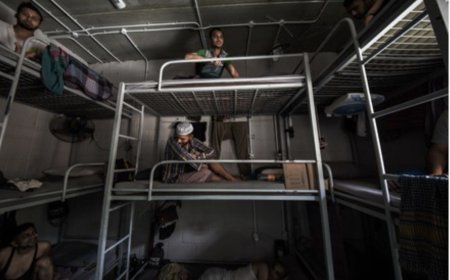
The Middle Eastern Job Market Is Dead

The countries that thrive in the next decade will be those that export skilled humans -- not bodies. The countries that survive will be those that build talent -- not hope for visas. And the countries that collapse will be those that cling to dead models and call it “tradition.”

Where War Turned to Wonder

Superpowers are increasingly reluctant to send their children into combat and expose them to trauma. This gradual shift  has opened vast, hard-to-predict possibilities for new forms of warfare with their effects rippling outward like the countless waves of the sea.

Ali Riaz’s Big Bet

Is tinkering with the formal rules of the game the triumph of hope over experience (this time politics will be different)? Or a more technocratic faith in the power of institutional architecture to push back against the potent political imperatives of rents and control (we can design our way to democracy)? Either way, fixing the rules seems a misplaced focus when history has shown that the amassing of political power rapidly renders such niceties ornamental.

Why New Delhi is Losing the Bangladeshi Heart

India has not merely provoked a cyclical wave of anti-India sentiment; it has actively contributed to giving it a permanent, structural form. The alienation is no longer just about borders -- it is about sovereignty.

Building Bangladesh’s Next Multi-Billion-Dollar Export Industry

The global shortage is real. The demand is guaranteed. The opportunity is enormous.

The Unlikely Reinvention of the American Dollar: From Oil to Blockchain

This is the quiet evolution of empire -- from military enforcement to financial automation. The dollar isn’t dying, at least not anytime soon. It’s being privatized.

Tariff Relief or Strategic Trade-Off?

20% is better than 35, but there is still a lot of work that needs to be done if Bangladesh wishes to remain competitive in the global marketplace

The Song Remains: Freedom, Memory, and the Refusal to Forget

Whether it is a party that markets itself as the sole heir of 1971, or a hardline movement that once mocked that struggle and now sanitizes its record, the exploitation is the same. Both seek to convert freedom into political capital. Both demand that citizens forget what they saw and felt. Both ask us to trade memory for myth.

The Great Blue Jeans War: How Sydney Sweeney’s Genes Powered Trump’s Spectacle Engine

The question for a republic is whether it can learn to look away from the dazzling, authoritarian image long enough to see -- and rebuild -- the dull, demanding, and essential foundations of a reality-based politics.

Learning from Tehran: A Warning for Bangladesh’s Democratic Future

The decision for Bangladesh is simply this: Either we recognize what is happening to our degree of liberty now, or we will soon read about it in the pages of history books as if it is a novel about something that was simply unavoidable.

Special

Culture

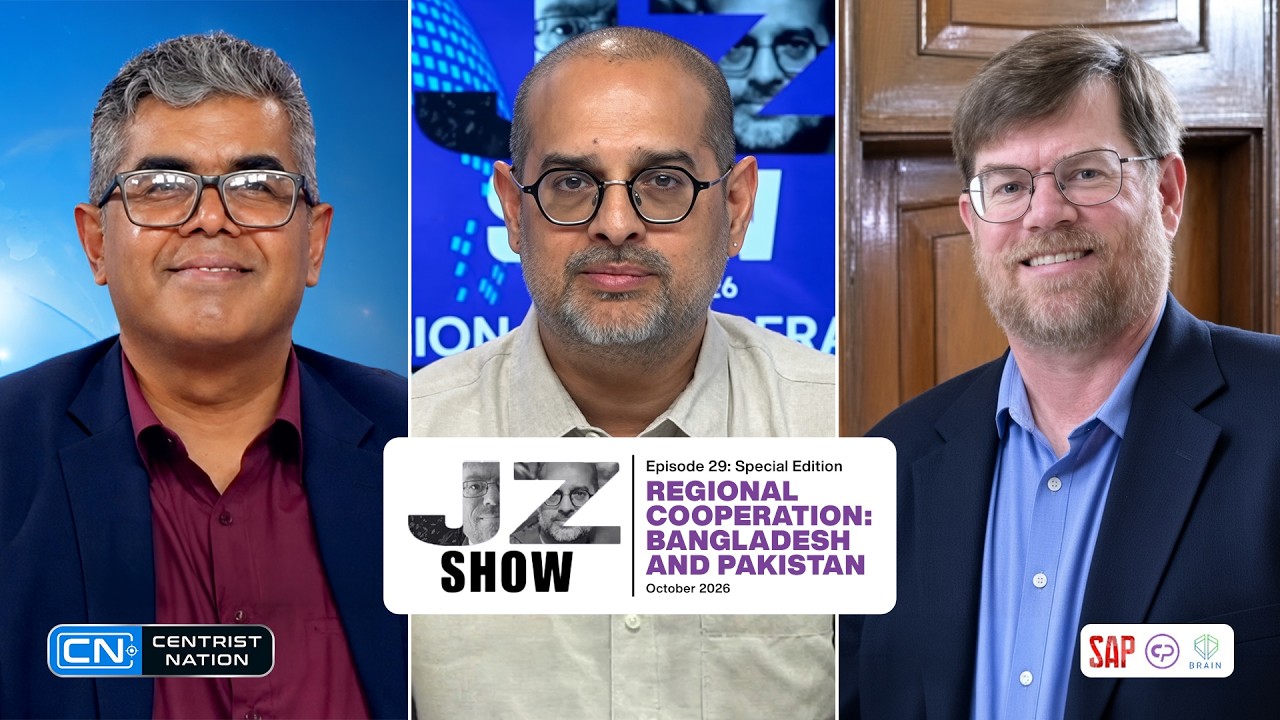
The J Z Show। Ep 14 । Dr Shamaruh Mirza | Zafar Sobhan। Jon Danilowicz

In this episode, Jon Danilowicz and Zafar Sobhan sit down with Dr Shamaruh Mirza for a wide-ranging and insightful conversation on India–Bangladesh relations, questions of justice and reconciliation, and what lies ahead as the country looks toward the upcoming elections.

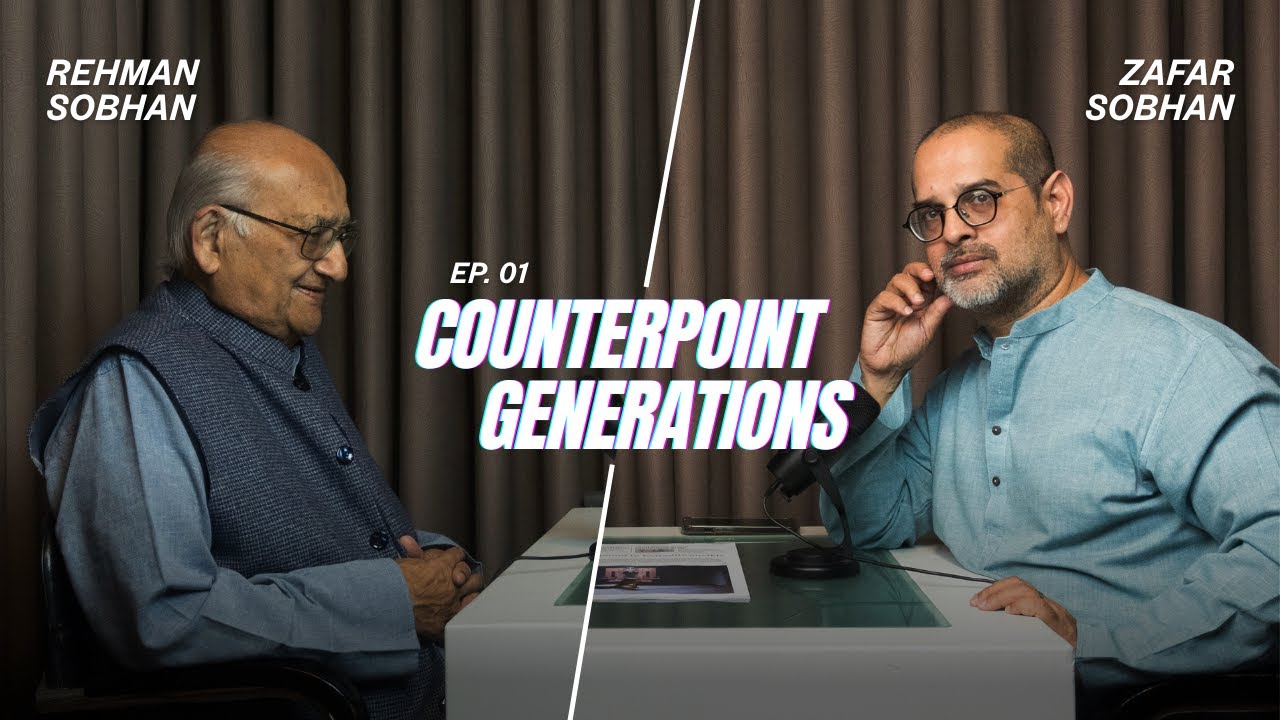
Counterpoint Generations | EP 5 | Professor Rehman Sobhan | Zafar Sobhan

In the fifth episode of Counterpoint Generations, Counterpoint Editor Zafar Sobhan and Professor Rehman Sobhan step back from daily headlines to reflect on history — focusing on the great homecomings, returns, and janazas that have shaped Bangladesh’s political and emotional landscape.

The J Z Show। Ep 13 । Zafar Sobhan। Jon Danilowicz

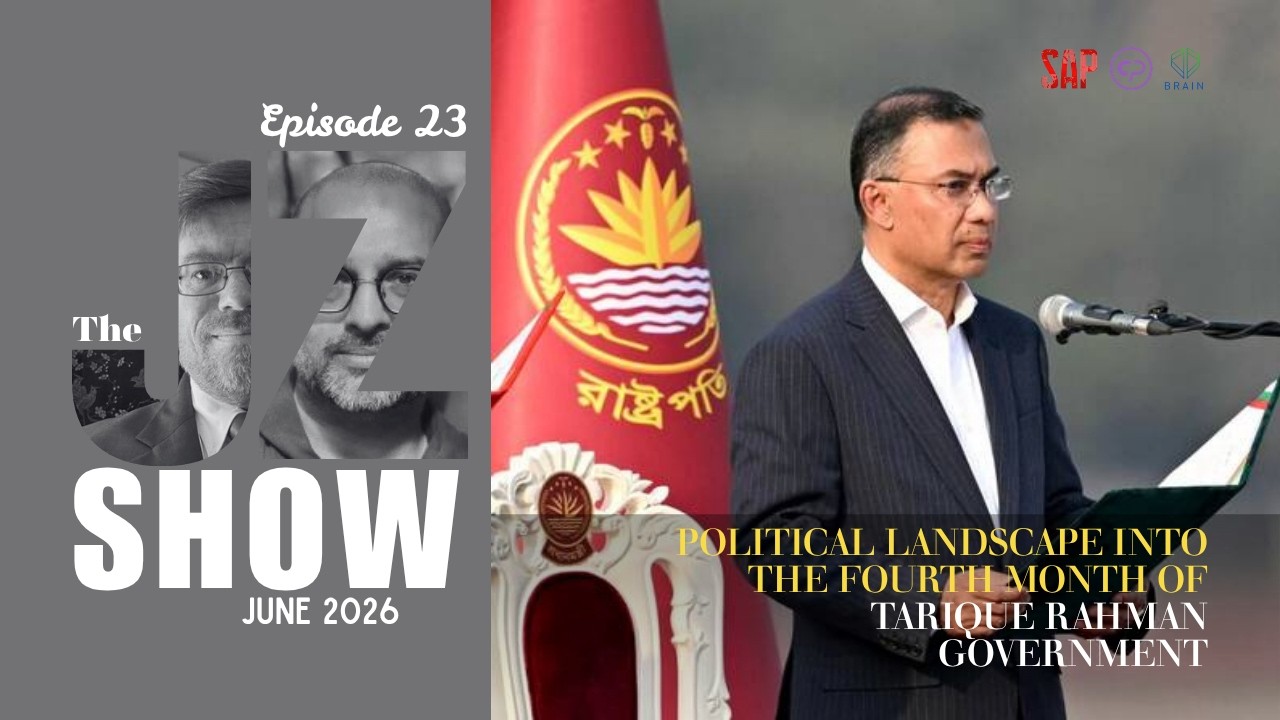
Tarique Rahman's Homecoming and New Political Alignments

Counterpoint Generations | Episode 4

A timely conversation on media, culture, and power, as Professor Rehman Sobhan and Zafar Sobhan reflect on recent events shaping Bangladesh’s democratic landscape.

Counterpoint Generations | Episode 3

In Episode 3 of Counterpoint Generations, Professor Rehman Sobhan and Zafar Sobhan revisit the 1971 Liberation War through rich personal memory and historical reflection, from turmoil to triumph.

Counterpoint Generations | EP 2 | Professor Rehman Sobhan | Zafar Sobhan

A thoughtful examination of leadership, party dynamics, and the unfinished story of parliamentary democracy in Bangladesh, as discussed by Rehman Sobhan and Zafar Sobhan.

Interview